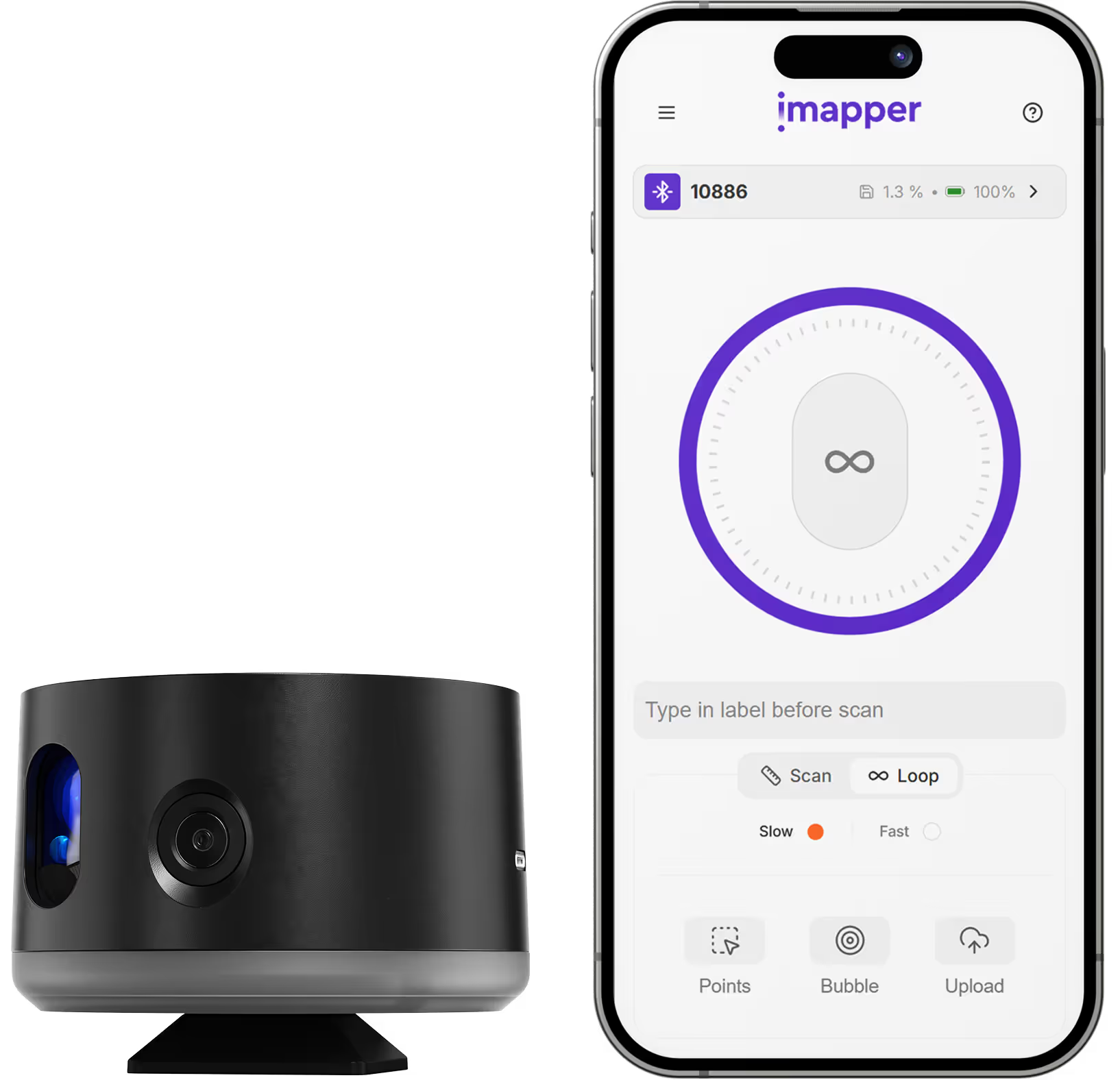
Palazzo Clerici, a UNESCO-listed 18th-century palace in Milan, documented its frescoed halls and historic interiors using iMapper's ±2mm laser scanning for preservation and restoration planning.
iMapper allowed us to document the Tiepolo gallery without scaffolding or disrupting the space. The 360° photos capture details we would have missed with traditional methods.
Dr. Elena Rossi
Preservation Architect
Challenge
Palazzo Clerici houses one of Giambattista Tiepolo's greatest frescoes—a 300 square meter ceiling masterpiece painted in 1741. The palace required comprehensive documentation for an upcoming restoration project.
Traditional documentation challenges
- Scaffolding would risk damage to delicate frescoes and gilded surfaces
- Manual measurements in ornate rooms with curved walls and irregular geometries took days
- Photography alone couldn't capture accurate spatial relationships
- Previous surveys had inconsistencies requiring costly re-measurement
"We needed millimeter accuracy without any physical contact with the historic fabric," explains Dr. Elena Rossi, the project's preservation architect.
Solution
The preservation team used iMapper to scan all principal rooms over three days—work that would have taken three weeks with traditional methods.
Key advantages for historic preservation
- Non-contact scanning: No scaffolding, no risk to frescoes or gilding
- ±2mm accuracy: Sufficient for detailed restoration drawings
- 360° photography: Every surface documented for condition assessment
- DXF export: Direct integration with AutoCAD for restoration drawings
The team scanned each room from multiple positions, capturing the complex geometries of baroque interiors—curved walls, ornate cornices, and irregular floor plans.
"The 360° photos proved invaluable," notes Dr. Rossi. "We discovered water damage patterns only visible from specific angles."
Result
Documentation results
- 12 principal rooms fully documented in 3 days
- ±2mm accuracy verified against control points
- 70% time reduction compared to traditional survey methods
- Zero contact with historic surfaces
Project impact
- Complete CAD documentation for €2.3M restoration tender
- 360° condition survey identifying previously unknown damage
- Baseline measurements for long-term monitoring
- Digital archive for UNESCO World Heritage documentation
The palazzo's restoration committee has adopted iMapper as standard for all future documentation work.


.png)














.png)

.png)
.png)




.png)
.png)
.png)